
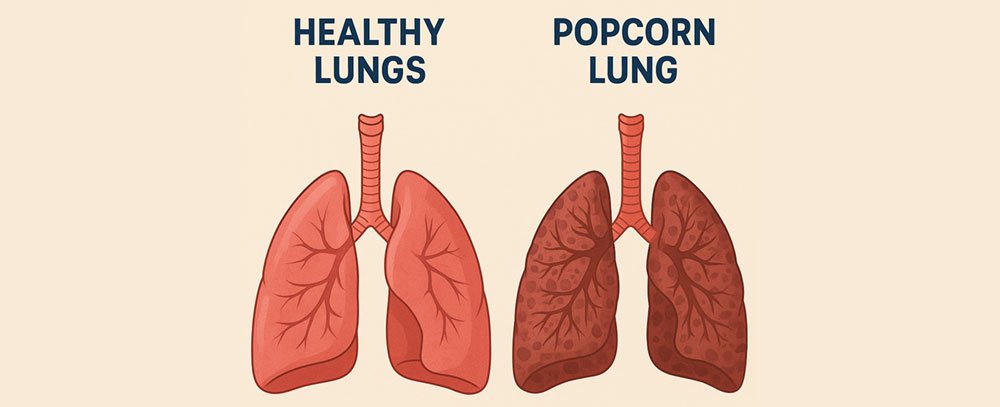
“Popcorn lung” is one of the most widely discussed risks associated with vaping — but also one of the most misunderstood. Over the years, headlines and social media posts have created confusion about whether vaping causes popcorn lung, what chemicals are involved, and how real the risk actually is.
This guide breaks down what popcorn lung is, where the concern came from, whether vaping contributes to it, and what current scientific research says.
What Is Popcorn Lung?
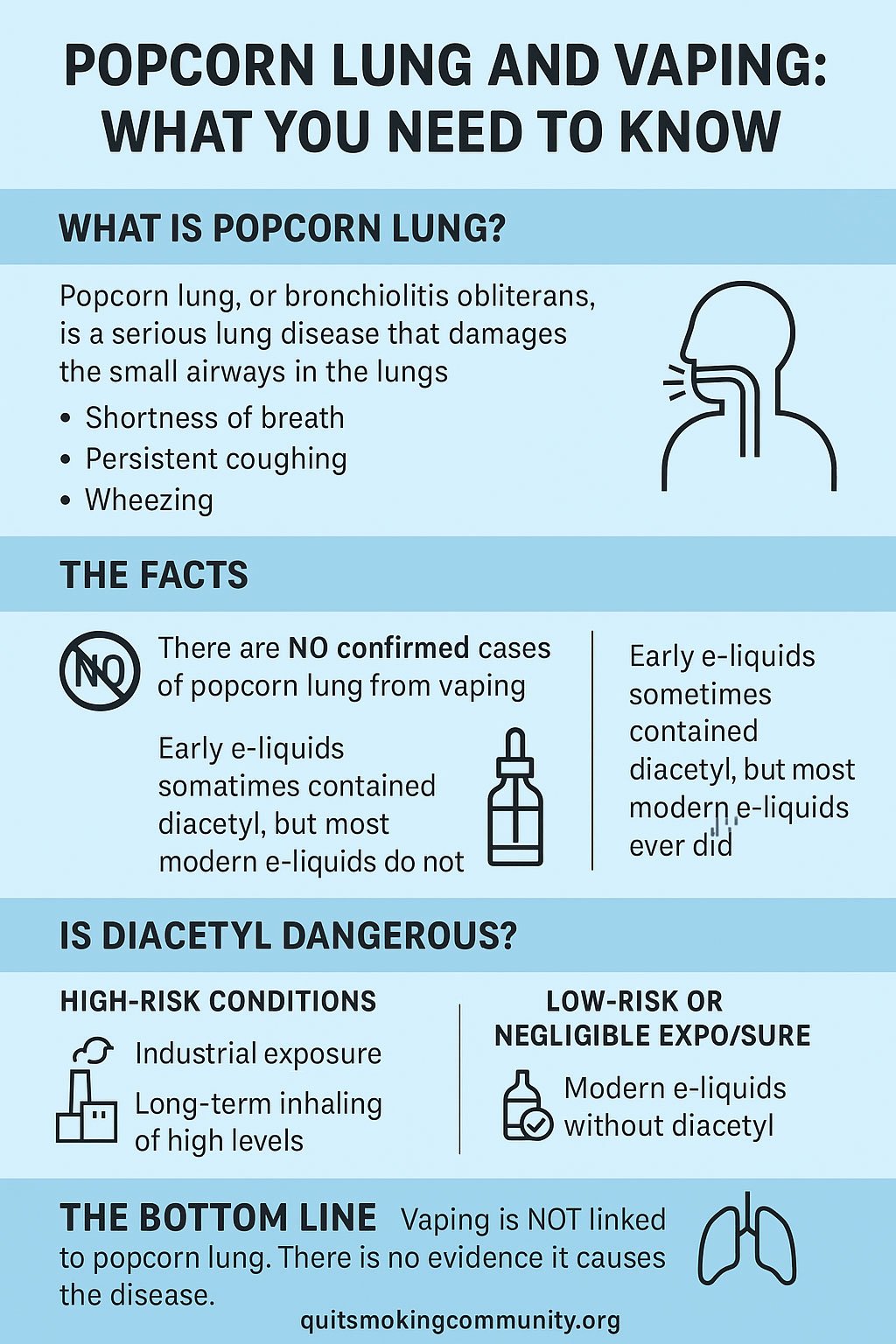
“Popcorn lung” is the nickname for bronchiolitis obliterans, a rare but serious lung disease. It damages the smallest airways in the lungs (bronchioles), causing them to become inflamed, narrowed, and scarred.
Symptoms of popcorn lung include:
- Shortness of breath
- Persistent coughing
- Wheezing
- Fatigue
- Difficulty exercising
- Feeling out of breath even at rest
The condition is irreversible but extremely rare.
Where Did the Term “Popcorn Lung” Come From?
The name comes from a case in the early 2000s involving workers in a microwave popcorn factory.
Many factory workers developed respiratory symptoms after prolonged inhalation of diacetyl, a buttery-flavored chemical used in some food manufacturing processes.
After investigation, diacetyl was identified as the key culprit.
This led to major changes in workplace ventilation and safety rules.
Does Vaping Cause Popcorn Lung? The Facts
Popcorn lung became associated with vaping due to early studies showing that some flavored e-liquids — particularly sweet or dessert flavors — contained small amounts of diacetyl.
This created widespread fear, but the reality is more nuanced:
1. Most modern e-liquids no longer contain diacetyl.
Reputable manufacturers and major brands removed diacetyl years ago.
2. Cigarette smoke contains far more diacetyl than early vape juices ever did.
To put this into perspective:
- A single cigarette contains hundreds of times more diacetyl than the highest early levels detected in vape liquids.
- Millions of smokers have used cigarettes for decades without popcorn lung being a commonly documented effect.
3. There are no confirmed cases of popcorn lung caused by vaping.
As of 2025:
- No medical journals
- No clinical reports
- No epidemiological studies
have documented vaping as a cause of bronchiolitis obliterans.
4. Popcorn lung is not related to nicotine.
It has to do with inhaling harmful chemicals — not the nicotine itself.
Why People Still Confuse Vaping With Popcorn Lung
There are three main reasons:
1. Early misinformation
In the early days of vaping, headlines exaggerated dangers without distinguishing between cigarette smoke, flavor chemicals, and long-term risk studies.
2. Diacetyl’s historical association with lung disease
Because diacetyl can cause popcorn lung at high industrial exposure levels, the chemical became a shorthand warning.
3. Viral social media posts
Misleading videos, infographics, and memes repeated the claim without evidence.
This caused many people to fear vaping even when the scientific data did not support the connection.
So, Is Diacetyl Dangerous?
Yes — but only under specific circumstances.
High-risk conditions:
- Industrial-level exposure
- Long-term inhalation in factories
- Poor ventilation
- High-volume concentration
Low-risk or negligible exposure:
- Occasional low-level exposure
- Exposure through food
- Modern, regulated vape liquids with zero diacetyl
It’s important to note that diacetyl is safe to eat, but not safe to inhale in large quantities.
What About “Vape Lung” or EVALI?
Some people confuse popcorn lung with the 2019 outbreak of EVALI (E-cigarette or Vaping-Associated Lung Injury).
These are not the same.
Popcorn lung = caused by diacetyl exposure
EVALI = caused by vitamin E acetate in illegal THC cartridges
EVALI had nothing to do with nicotine vaping and nothing to do with popcorn lung.
Is There Any Respiratory Risk From Vaping?
While vaping contains far fewer chemicals than smoking, it is not completely risk-free.
Potential risks include:
- Throat irritation
- Coughing
- Asthma triggers
- Sensitivity to PG/VG
- Long-term unknowns (ongoing research)
But popcorn lung is not one of the known or documented risks.
How to Make Vaping Safer If You Vape
If a person chooses to vape, recommended harm-reduction steps include:
- Choose reputable brands
- Avoid black-market or unregulated liquids
- Avoid cheap dessert/artificial butter flavors
- Check that e-liquids are diacetyl-free
- Don’t use THC cartridges unless legally regulated
- Avoid DIY mixing unless highly experienced
Most major vape manufacturers already test for diacetyl and acetyl propionyl.
Bottom Line: Does Vaping Cause Popcorn Lung?
Short answer:
No — there are zero confirmed cases of popcorn lung caused by vaping.
Long answer:
- Popcorn lung is a real disease, but extremely rare.
- It was caused by long-term industrial exposure to high levels of diacetyl.
- Early vape liquids sometimes contained diacetyl; most do not today.
- Cigarettes contain far more diacetyl than early e-liquids, yet smoking has not been shown to cause popcorn lung in the general population.
- No medical evidence links nicotine vaping to bronchiolitis obliterans.
Final Summary
Popcorn lung is one of the most misunderstood health claims surrounding vaping. While diacetyl exposure can cause bronchiolitis obliterans in industrial settings, there is no credible evidence that vaping — especially modern, diacetyl-free e-liquids — causes popcorn lung.
If you vape, the biggest concern is choosing trusted, tested products. If you smoke, the risk of lung disease from cigarettes is exponentially higher than any documented risk from vaping.