
So you have a smoker’s cough? We feel you. Many of us deal or have dealt with it in the past and we understand how much it sucks.
We’re going to go into the what smoker’s cough is, why you get it, provide you with some more information on smoker’s cough, then finally tell you how to STOP smoker’s cough.
What is Smoker’s Cough?
The infamous smoker’s cough isn’t like what happens when you have a chest cold. It means that you’ll have a persistent cough all day long that just doesn’t ever go away. This isn’t the kind of cough where a cough drop or cough suppressing medicine can give you relief! Early on, particularly if you’re not a heavy smoker, the cough associated with smoking will be dry and won’t produce any goop when you cough. But in later stages of smoker’s cough or if you smoke more heavily, the cough will be “wet” and will bring up phlegm every time. The phlegm can be any color, from clear to yellow or green. It’s also worst when you wake up in the morning.
Smoker’s cough can come with some telltale signs: phlegm production (that lovely goop we just mentioned), crackling sounds in your chest, and sometimes even wheezing. It’s persistent, often making its grand entrance in the morning and stubbornly sticking around all day. But here’s where things get tricky—smoker’s cough can sound a lot like the cough you might get from more serious lung conditions, like COPD or even lung cancer. That’s why it’s so important not to ignore changes in your cough, especially if you notice it getting worse, lasting longer, or coming with new symptoms. Regular check-ups with your doctor can help catch anything serious early on, particularly if you’re a current or former smoker.
Why Does Smoker’s Cough Happen?
Your lungs have little hair-like structures called cilia. Normally these cilia help to move toxins through your lungs to protect them, but smoking paralyzes the cilia and makes them unable to do their job. This makes the toxins just settle into your lungs, which causes an inflamed reaction and your body has to work to try to get the toxins out of your respiratory system. Coughing is the way your lungs try to get rid of all the toxins from smoke.
How Common Is Smoker’s Cough Among Smokers?
You might be wondering just how many smokers out there are hacking alongside you. Turns out, smoker’s cough is a lot more common than you might think. For example, when researchers checked in with a bunch of young military recruits, more than 4 out of 10 who smoked every day reported battling a chronic cough along with a steady stream of phlegm. And these weren’t even longtime smokers—just folks between 18 and 21!
The truth is, the longer and more regularly you smoke, the higher your odds of joining the Coughing Club. While not every single smoker gets it, persistent and heavy tobacco use dramatically increases your chances. So, if you have a smoker’s cough, you’re definitely not alone—and unfortunately, as time goes on, it only becomes more common.
Negative Consequences of Smoker’s Cough

A smoker’s cough not only sounds unpleasant to listen to, it is also uncomfortable to experience. In addition to the cough itself being painful, the frequent deep coughing can cause a lot of chest pain as well.
However, even if you have become accustomed to the frequent coughing, others around you can be disturbed by it. This can have a negative impact on your social life as well as on how you’re perceived at work. Because you’re used to having a frequent cough, it can also make it difficult for you to differentiate when you’re actually showing signs of a more serious smoking-related disease.
When Smoker’s Cough Means Something Worse
By itself, the classic smoker’s cough only indicates that your lungs are irritated. However, that irritation does put you at risk of developing other infections because bacteria and viruses can take hold more easily when your lungs aren’t healthy.
Smoker’s cough can often be recognized by certain telltale signs. You might notice that your cough produces phlegm—sometimes clear, yellow, or green—and you may hear crackling sounds in your chest, or even experience wheezing. These symptoms can be unsettling, but it’s important to remember that the line between an “ordinary” smoker’s cough and something more serious isn’t always obvious. Coughs caused by underlying lung conditions, such as cancer or COPD, can look and sound very similar to smoker’s cough. That’s why it’s vital—especially for smokers—to stay on top of regular medical check-ups and be vigilant about any changes in your symptoms.
Bronchitis is one of the most common problems that can affect long term smokers. The bronchial tubes get swollen and your body produces more mucus, which can create a thick lining inside your lungs and make it difficult for enough air to get through. In addition, that layer of mucus can be a breeding ground for bacteria, which can cause serious enough infections to take hold that only antibiotics would get rid of them.
If you get to a point where you’re coughing up blood, frequently losing your voice or wheezing, it could be a sign of more serious damage to your lungs. You need to be in regular contact with your doctor about any changes to the frequency or intensity of your cough, as well as about other symptoms you may be experiencing.
How to Stop Smoker’s Cough
Having a smoker’s cough is actually a normal thing. It’s a sign that your body is trying to deal with what you’re doing to it and trying to heal itself. Our bodies always try to repair themselves, no matter what we do to them. You shouldn’t try to suppress the cough with cough medications because it has a very important purpose.
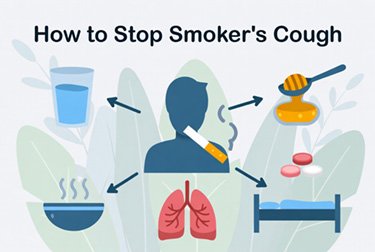
Although quitting smoking is the only way you can stop a smoker’s cough, but there are 6 quick ways you can help your body heal more effectively, relieve some of the irritation, and temporarily stop smoker’s cough. Some of the treatments you can do to feel a little better include the following:
- Drink enough water: Doctors and health experts always tell you to drink more water to help you manage all sorts of health conditions, from allergies to trying to lose weight. It turns out that drinking six to eight glasses of water a day is helpful in relieving smoker’s cough too because it thins out the mucus in your lungs and throat. Gargling with warm salt water can provide some comfort to an irritated throat.
- Just add honey: Adding a little honey to your tea or just consuming a teaspoon full of it plain can really soothe your throat – and it tastes good, too.
- Suck on throat lozenges: Traditional cough drops may reduce some of the irritation that leads to coughing, but any hard lozenge you need to suck on will have the same benefits. Vitamin C lozenges can provide the same relief to your throat but have the added bonus of vitamins that can boost your immune system: If you want one some Vitamin C lozenges you can check some out here or by clicking the picture on the right. (Bonus: these are cheap AND healthy…plus they taste so good!).
- Eucalyptus vapor in your room: Whether you steam eucalyptus or mint leaves over boiling water or put a humidifier in your room with a eucalyptus based liquid like Vicks, these minty vapors can naturally help you breathe better for a while.
- Sleep with your head slightly elevated: Prop up your head on a couple pillows while you sleep to minimize the mucus drainage into your throat that leads to coughing. Some of us have used these and find they’re VERY helpful. Clears you out so you feel much better the next day too. The one to the right works particularly well.
- Eat healthy and exercise: These steps are an essential part of every healthy lifestyle. Just because you smoke doesn’t mean you have to give up on the rest of your health.
All in all, it’s very important to get away from the smokes if you want to stop smoker’s cough. We found the best way to start this step is by using e-cigs. No kidding – thousands of Quit Smoking Community readers have stopped smoker’s cough using e-cigarettes.
What Does Smoker’s Cough Feel Like?
Smoker’s cough can feel different from person to person. For some people, it starts as a dry, scratchy cough that shows up most in the morning. For others, it becomes a deeper, wetter cough that brings up mucus after smoking or after waking up. It may come with throat irritation, chest tightness, hoarseness, or the feeling that you constantly need to clear your throat.
Many smokers notice that the cough is worse first thing in the morning. That can happen because mucus builds up overnight, then starts moving once you get up and begin breathing more deeply. If you have been smoking for a long time, the cough may feel so “normal” that you stop noticing how often it happens until it begins interrupting sleep, exercise, work, or conversations.
Can Smoker’s Cough Get Worse After You Quit?

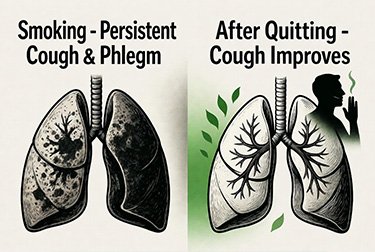
Yes, sometimes it can. One frustrating part of quitting is that your cough may seem to increase before it improves. This does not always mean something is wrong. In many cases, it means your lungs are trying to clear out trapped mucus and debris more effectively than before.
Smoking can slow down or paralyze the tiny hair-like structures in the airways that help move mucus out of the lungs. After quitting, those structures can gradually start working again. As that happens, you may cough more for a short period because your body is finally clearing material that had been sitting in your airways.
If you are going through this stage, it may help to remind yourself that not every symptom after quitting is a setback. Sometimes it is part of the healing process. You can also read more about the early quit phase here: Nicotine Withdrawal Timeline and Symptoms.
The Link Between Smoker’s Cough and Chronic Obstructive Pulmonary Disease (COPD)
You might wonder what your everyday smoker’s cough could have to do with something as serious as COPD. Here’s the deal: that stubborn, never-ending cough is actually one of the main warning signs that your lungs are having trouble coping.
COPD stands for chronic obstructive pulmonary disease—a mouthful, but basically it’s a long-term issue that makes it harder and harder to breathe over time. COPD isn’t just one problem; it’s really a group of lung conditions, including both chronic bronchitis and emphysema. The common thread among them? They’re typically caused by years of smoking.
Here’s why this matters: that constant cough and extra phlegm production are two of the earliest clues that COPD could be in the cards. Other signs can include wheezing and a tight or heavy feeling in your chest, especially when you try to be active. The worse these symptoms get, the more your lungs are struggling.
The Centers for Disease Control and the National Heart, Lung, and Blood Institute both point out that COPD is one of the leading causes of death in the U.S.—and smoking is the #1 culprit. So if your cough just won’t quit, and especially if you notice your breathing isn’t what it used to be, it might be more than just an annoyance. It could be a warning from your body that it’s time to get serious about your lung health.
Will Smoker’s Cough Go Away If You Keep Smoking?
As long as you keep smoking, it’s unlikely that the cough will fully go away. Home remedies and over-the-counter solutions may help with symptoms, but they won’t resolve the underlying problem. Quitting smoking remains the most effective way to allow your lungs to heal and eventually quiet the cough.
Signs It May Be More Than a Typical Smoker’s Cough
Smoker’s cough should never be used as a reason to ignore serious symptoms. A cough deserves medical attention if you are coughing up blood, having chest pain, feeling short of breath, wheezing more than usual, bringing up thick discolored mucus for a prolonged period, or dealing with a cough that simply will not go away.
You should also be more cautious if you have repeated chest infections, fevers, unexplained weight loss, unusual fatigue, or voice changes that keep coming back. These symptoms do not automatically mean something severe is happening, but they do mean the cough should not be brushed off.
Smoker’s Cough and Lung Cancer: What’s the Link?
Now, let’s address an important—and maybe a little scary—question: what does your smoker’s cough have to do with lung cancer?
Unfortunately, the answer is pretty direct. Smoking is the main cause of lung cancer, responsible for the overwhelming majority of cases in the United States. According to the Centers for Disease Control and Prevention (CDC), about 90% of all lung cancers are tied to smoking—even if you don’t smoke heavily or only light up once in a while.
The persistent cough that many smokers experience isn’t just a harmless annoyance; it’s your body desperately trying to clear out harmful chemicals that can seriously change the way your lung cells work. Over time, those repeated irritations and lingering toxins can damage the cells lining your lungs, making it much easier for cancer to take hold. Consistent coughing, alongside other symptoms like shortness of breath or chest pain, can sometimes be a warning sign that something more serious is brewing.
If you notice your cough changing—getting worse, lasting longer, or being accompanied by blood or unexplained weight loss—it’s time to take it seriously and get checked out by your doctor. Catching problems early can make a big difference.
How Long Does Smoker’s Cough Last After Quitting?
There is no single timeline that fits everyone. How long the cough lasts can depend on how long you smoked, how often you smoked, whether you also vaped, your general lung health, and whether another condition is present, such as bronchitis, asthma, reflux, or allergies.
Some people notice improvement within a few weeks. Others may continue coughing for a few months while their lungs recover. What matters most is the overall direction. If the cough is gradually becoming less frequent, less harsh, or less productive, that is usually a better sign than expecting it to disappear overnight.
It’s important to know that for many people, smoker’s cough does not vanish the moment you quit. Even after your last cigarette, the cough may persist for several weeks or even months as your lungs work to clear out the accumulated mucus and debris from years of smoking. In most cases, the cough will steadily improve with time, but patience is required—think of it as your body’s way of “spring cleaning” for your airways.
If your cough is getting worse instead of better, keeps lasting for weeks without any improvement, or is affecting sleep and breathing, it is smart to get it checked instead of assuming it is “just smoker’s cough.”
Does Smoking Increase the Risk of Pneumonia?
Absolutely. Smoking damages your lungs in several ways, making you much more prone to pneumonia. When you smoke, you compromise your lungs’ natural defenses—those poor little cilia we mentioned earlier get beaten up by tobacco smoke and can’t sweep out germs and debris like they’re supposed to. This gives bacteria a chance to set up camp in your lungs, leading to infections like pneumonia.
If you’re already dealing with chronic conditions caused by smoking, such as emphysema or chronic bronchitis, a bout of pneumonia can be even tougher on your system. In some cases, especially if you have other health problems, pneumonia may be serious enough to land you in the hospital.
Not only does smoking make it easier to get pneumonia, but it also makes recovering much more difficult. If you find yourself facing symptoms like a worsening cough, high fever, or trouble breathing, it’s important to talk to your doctor right away.
How Does Smoking Cause Emphysema?
Emphysema is one of the nastier complications that can sneak up on folks who smoke for an extended period of time. The main culprit? Damage to the alveoli—those tiny air sacs in your lungs responsible for exchanging oxygen and carbon dioxide. Here’s how it happens:
When you smoke, all kinds of toxins, tar, and chemicals get dragged into your airways. Over time, these irritants relentlessly attack and inflame the delicate linings of your alveoli. Eventually, the walls between the air sacs start to weaken, stretch out, or even burst, reducing your lungs’ surface area and making it much tougher for oxygen to pass into your bloodstream.
As emphysema progresses, you might find yourself short of breath from even mild activity, and persistent coughing—often with a wheeze—is common. What’s worse, your body struggles to get enough oxygen, which can leave you tired and less able to keep up with day-to-day life.
Smokers are at the highest risk for emphysema because their cilia—the little brushes in your lungs we mentioned earlier—are already paralyzed and can’t sweep out the bad stuff. As a result, your lungs basically lose their ability to repair and protect themselves, paving the way for long-term, irreversible damage.
Can Smoker’s Cough Lead to Incontinence in Women?
Here’s something most people never expect—smoker’s cough can actually make certain issues pop up that don’t seem connected to your lungs at all. One surprising side effect, especially for women, is stress urinary incontinence.
Every time you have a forceful coughing fit, you’re putting pressure on your bladder. Over time, and with the repeated stress that comes with a persistent smoker’s cough, this can weaken the muscles that help you control urination. Studies have found that women who smoke are more likely to develop incontinence than non-smokers, often noticing a sudden urge to use the bathroom after a bout of coughing.
If you’ve ever found yourself having to rush to the restroom after a coughing spell, you’re definitely not alone, and it’s yet another frustrating reason to take that cough seriously.
What Actually Helps Calm Smoker’s Cough?
The most effective long-term step is quitting smoking completely. That is what gives your lungs the best chance to recover. But while you are healing, a few simple habits may help reduce irritation:
- Stay hydrated: Drinking enough water may help keep mucus thinner and easier to clear.
- Use warm steam carefully: A warm shower or humidified air may help some people feel less congested.
- Avoid smoke triggers: Secondhand smoke, strong cleaning fumes, and dust can keep the cough going.
- Rest your throat: Constant throat-clearing can make irritation worse.
- Take gentle walks: Light activity can sometimes help loosen mucus and support recovery.
It can also help to support the rest of your quit process, not just the cough itself. These resources may fit naturally here:
- Cold Turkey Guide
- The Stages of Quitting Smoking
- Quit Smoking Hotlines
- I Want to Quit Smoking. What Do I Do?
Does Vaping Cause a Similar Cough?
It can. While people often think only cigarettes cause a chronic smoker’s cough, vaping can also irritate the throat and airways. Some users develop a frequent cough, throat dryness, chest discomfort, or a feeling of mucus in the chest. If someone has switched from cigarettes to vaping but still has a persistent cough, the lungs may still be irritated rather than fully recovering.
That is one reason it is helpful to look at the bigger picture: reducing nicotine dependence, reducing airway irritation, and building a plan to become fully smoke-free or vape-free over time.
Why Morning Cough Is So Common in Smokers
Morning cough is extremely common because mucus and airway irritation do not stop when you sleep. Overnight, mucus can collect and settle. Then when you wake up, stand up, change position, and start breathing more actively, your body tries to move it out. That is why many smokers have a rough coughing spell early in the day and then fewer episodes later on.
Some people also notice the cough is worse after the first cigarette of the morning. That may be because the airway is already irritated from overnight mucus buildup, then hit again with fresh smoke.
How to Track Whether Your Cough Is Improving
If you are quitting, it can help to track your cough for a few weeks instead of relying on memory. Write down:
- How often you cough each day
- Whether it is dry or productive
- Whether it is worse in the morning or at night
- Whether you notice wheezing, chest tightness, or shortness of breath
- Whether symptoms are improving, staying the same, or getting worse
This can help you see progress more clearly and also gives a doctor useful information if you decide to get checked.
FAQ About Smoker’s Cough
Is smoker’s cough permanent?
Not always. Many people improve after quitting, but recovery time varies. The longer and heavier someone has smoked, the more time the lungs may need. In some cases, a chronic cough can also point to another issue that needs treatment.
Is it normal to cough up mucus after quitting smoking?
Yes, that can happen. Some people temporarily cough up more mucus after quitting because the airways begin clearing out material that built up while smoking.
Can smoker’s cough be dry?
Yes. It may start dry and irritating, especially in lighter smokers or earlier on. Over time it can become wetter and more productive.
When should I worry about smoker’s cough?
You should take it more seriously if you are coughing up blood, having chest pain, struggling to breathe, wheezing more than usual, or dealing with a cough that lasts for weeks without improvement.
Will cutting back help?
Smoking less may reduce irritation somewhat, but complete quitting gives your lungs the best chance to recover. Cutting back is often a step forward, but it usually is not the same as removing the cause.