
Even if you know all about the dangers associated with smoking, you might think that you’re safe from harm if you’re not a smoker. However, if you live with someone who smokes or spend a lot of time in an environment where others are smoking, you could be damaging your health nearly as much as if you smoked yourself. This form of passive exposure to smoke is also called secondhand smoke, and it can be dangerous to your health. Here are some ways secondhand smoke puts you at risk – and how you can fight back to minimize those risks.
What Types of Smoke are Risky?
The smoke that comes from the end of a lit cigarette is called sidestream smoke and the smoke exhaled by a smoker is called mainstream smoke. Although both are damaging, sidestream smoke contains more cancer-causing particles and is much more dangerous. All forms of burning tobacco, including cigarettes, pipes and cigars, release mainstream and secondhand smoke and contain toxins. Some of the dangerous chemicals in all forms of smoke include benzene, hydrogen cyanide, carbon monoxide and formaldehyde. Secondhand smoke contains over 7,000 chemicals, at least 69 of which can cause cancer.
Where Are You Most at Risk?
Secondhand smoke can reach you in more places than you might think. Understanding these environments is key to protecting yourself and your loved ones.
At Work
The workplace is a major source of secondhand smoke exposure for many adults. While many cities, states, and even federal agencies have passed laws making offices and public spaces smoke-free, some workplaces still allow employees or customers to smoke. The only way to truly protect workers is a complete ban on indoor smoking—ventilation and air purifiers don’t cut it. Smoke-free workplace policies not only safeguard non-smokers but can also encourage smokers to cut back or quit altogether.
At Home
Making your home smoke-free is one of the most important steps you can take for your family’s health. Any family member can develop health problems from secondhand smoke, but children are especially vulnerable to its toxins. Even pets aren’t immune. If you live in multi-unit housing, keep in mind that smoke can drift from one apartment to another through vents, cracks, and even elevator shafts—meaning your neighbor’s cigarette can become your problem.
In Public Places
Public places where smoking is permitted—such as certain restaurants, shopping centers, public transportation, parks, and schools—are also common sources of exposure. Whenever possible, choose smoke-free restaurants and businesses, and encourage those that aren’t yet smoke-free to consider the health of their patrons. Places like daycare centers and schools should always be smoke-free to protect children.
In the Car
Cars are compact spaces where toxins from cigarette smoke can build up fast, even with the windows open or the air conditioning running. This is especially dangerous for children, who breathe faster and are more susceptible to harm. Recognizing this, some states and cities have passed laws banning smoking in cars when children are present.
Many public facilities—malls, schools, colleges, hospitals—now ban smoking not only inside, but even in their parking lots. There is no safe level of exposure to secondhand smoke; any amount can be harmful.
Effects on Children
Adults often have a choice about whether or not they’re exposed to secondhand smoke. But children are powerless and vulnerable when it comes to smoke exposure, and it can have detrimental effects on a child’s development.
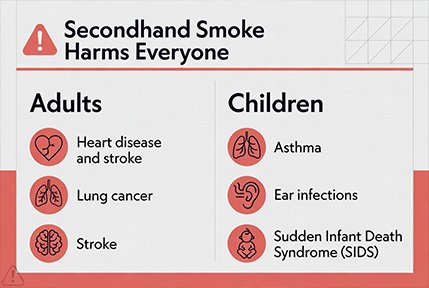
One of the biggest potential risks to child health from growing up in a smoking home is chronic asthma. As many as one million children are suffering from asthma because of exposure to secondhand smoke, and the secondhand smoke makes related health complications more likely to occur. Children who grow up around secondhand smoke are at greater risk of upper respiratory and lung infections like bronchitis and pneumonia.
Infants exposed to secondhand smoke have more ear infections and are at much higher risk of sudden infant death syndrome, or SIDS.
When mothers smoke during pregnancy, it can also cause problems with their child’s development. Prenatal smoking is associated with very low birth weights and premature births, which endangers a baby’s life and can require expensive medical care at the time of birth.
Specific Health Risks
Exposure to the chemicals in secondhand smoke can weaken your immune system and put you at greater risk of developing cancer. Although lung cancer is the greatest risk, some evidence suggests that secondhand smoke may also be linked to breast cancer. The risk of lung cancer in nonsmokers increases by 25 to 30 percent when regularly exposed to secondhand smoke. About 3,000 deaths occur each year in nonsmokers who live with smokers.
In addition to increasing the risk of lung cancer, secondhand smoke also boosts your risks of other lung and respiratory infections, such as bronchitis and pneumonia. It can cause more complications associated with asthma in susceptible individuals as well.
Secondhand smoke also drastically increases your risk of having a heart attack, almost as much as if you smoked yourself. Exposure to secondhand smoke is responsible for nearly 50,000 fatal heart attack deaths each year. A 2009 report by the Institute of Medicine found that even brief exposure to secondhand smoke could be significant enough to trigger a heart attack.
Another matter that is less deadly but still a very serious concern is that exposure to secondhand smoke can cause problems with infertility and miscarriage. A study by the University of Rochester Medical Center found that women who grew up with at least six hours a day of exposure to secondhand smoke were 68 percent more likely to have difficulty getting pregnant and to suffer from one or more miscarriages.
Minimizing Secondhand Smoke Risk
The risks of secondhand smoke increase proportionately with the amount of smoke you’re exposed to, although there is no safe level of exposure. When you’re a child, you obviously have no choice about whether or not you’re exposed to smoke. Public health and safety campaigns may be more effective in encouraging parents and other adults not to smoke in the presence of children.
Many cities are passing ordinances that prohibit smoking in indoor spaces, including places of work, government buildings, and even restaurants and bars. When Pueblo, Colorado enacted a smoking ban in 2003, it resulted in a 27 percent reduction in hospital admissions for heart attacks. Helena, Montana found a 40 percent reduction in heart attacks after a smoking ban. However, some studies suggest that those improvements are only temporary.
According to the Surgeon General, smoke-free workplace policies are the only way to prevent people from being exposed to secondhand smoke at work. These restrictions don’t just protect nonsmokers—they may also encourage people who smoke to cut back or even quit altogether, multiplying the public health benefits.
However, public support is not unanimous when it comes to smoking bans in bars, with support for such measures running only slightly above 50 percent. Even cities that pass ordinances that ban smoking in bars and restaurants often revisit those issues later. The city of Casper, Wyoming, for example, successfully voted to overturn their ban on smoking in certain public spaces.
Limiting or completely avoiding exposure to secondhand smoke is the only way to get rid of your risks from it. Although changes in public opinion and even legislation prohibiting secondhand smoke can definitely help to reduce the risk, ultimately only you can control your health by choosing to avoid exposure.
Creating a smoke-free home environment is especially important. Any family member—adults, children, and even pets—can develop health problems from secondhand smoke, but children are especially sensitive to its harmful effects. Making your living space smoke-free not only protects your immediate family but also helps ensure the wellbeing of your guests. Every step you take to eliminate smoke from your surroundings, whether at home or in shared spaces, significantly reduces health risks for everyone involved.
How Secondhand Smoke Travels Through Apartment Buildings
You might imagine you’re protected from secondhand smoke if you keep your own home smoke-free, but in multi-unit buildings, it’s not that simple. Smoke from neighboring units doesn’t politely keep to itself—instead, it can drift unexpectedly into your living space.
Secondhand smoke finds creative ways to travel, including:
- Sneaking through air vents and shared ductwork
- Seeping through tiny gaps around electrical outlets, plumbing, and baseboards
- Moving between floors via elevator shafts and stairwells
- Creeping through cracks in shared walls or under doors
This means that even if you never light up and ask guests to do the same, you can still be exposed just by living near smokers in attached apartments, condos, or townhomes. The airflow in these buildings can easily carry tobacco smoke from one unit to the next, sometimes reaching apartments far from the original source. This makes the risks of secondhand smoke a reality—even for those who make every effort to keep their homes smoke-free.
What About Secondhand Vapor from E-Cigarettes?
With the rise of e-cigarettes and vaping devices like JUUL, SMOK, and countless flavored vapes crowding smoke shops from New York to Los Angeles, many wonder: is the vapor from these gadgets any safer for bystanders than regular cigarette smoke? Unfortunately, the answer is not as reassuring as some might hope.
Secondhand vapor (sometimes called aerosol) is what’s released into the air when someone exhales after using an e-cigarette. While it may not fill the room with smoke the way a traditional cigarette does, don’t be fooled—this cloud contains more than just water vapor. Researchers have identified that secondhand vapor can carry nicotine, along with a cocktail of other potentially harmful substances such as ultrafine particles, heavy metals (like lead and nickel), and compounds like formaldehyde, all of which can pose health risks when inhaled by non-users.
The full picture is still coming into focus, but leading health authorities warn that breathing in secondhand e-cigarette vapor is far from harmless. Those who spend time around regular vapers—at home, in cars, or in public places—may end up exposed to chemicals that could impact respiratory and cardiovascular health, especially over time.
Given these risks, many public health organizations now recommend that smoke-free environments include a ban on vaping as well. Until more is known, the simplest way to protect yourself and your family from the hidden dangers of secondhand aerosol is to avoid sharing air with vape users, much like you would with cigarette smoke.
Is Secondhand Vapor from E-Cigarettes Dangerous?
While most people are aware that traditional tobacco smoke poses serious health risks, the rise of e-cigarettes and vaping devices has introduced new questions—especially about secondhand exposure. You might wonder if being around someone who vapes is any safer than being around cigarette smoke.
The truth is, the aerosol produced by e-cigarettes—sometimes called “vapor”—isn’t just harmless water vapor. When someone uses a vape, they exhale a mix of nicotine, ultrafine particles, and a cocktail of chemicals like heavy metals and volatile organic compounds. These can linger in the air, making the environment less healthy for everyone nearby.
Although research on long-term effects is still ongoing, leading health organizations and public health experts agree that breathing in secondhand vapor isn’t risk-free. In fact, the U.S. Surgeon General has stated that e-cigarette emissions can contain substances linked to lung irritation and other health issues, even if the risks differ from those of traditional cigarettes.
If you want to avoid exposure, the best approach is to extend existing no-smoking rules to cover e-cigarettes and vapes. That way, non-users—especially children and those with respiratory concerns—can breathe easier.
What’s Lurking in Secondhand E-Cigarette Aerosol?
Most people have heard of the dangers lurking in traditional tobacco smoke, but what about the misty clouds billowing from electronic cigarettes? This mist—sometimes charmingly called “vapor”—is more than just water. When someone puffs on a JUUL, vape pen, or mod, the resulting aerosol contains an array of chemicals that can affect anyone nearby.
So, what might be floating around in that secondhand e-cigarette aerosol? Scientists have identified several substances, including:
- Nicotine: Even if you’re not the one vaping, you can still inhale nicotine when someone else exhales “harmless vapor.”
- Ultrafine particles: These tiny particles are easy to breathe in and can reach deep into your lungs.
- Volatile organic compounds (VOCs): Things like benzene (also found in car exhaust) and toluene may be present.
- Flavoring chemicals: Some flavorings, such as diacetyl (popular in buttery flavors), have been linked to lung disease.
- Heavy metals: You might find traces of lead, nickel, and tin—these can come from the metal parts of the device itself.
- Acrolein and formaldehyde: Both of these chemicals can irritate your airways and are known for being nasty to your lungs.
While research is still catching up with the rapid rise of vaping, health experts warn that these aerosols are far from harmless. If you thought switching to e-cigarettes meant you could avoid secondhand exposure altogether, it may be time to think again.
How Lingering Smoke Particles (Thirdhand Smoke) Pose Health Risks
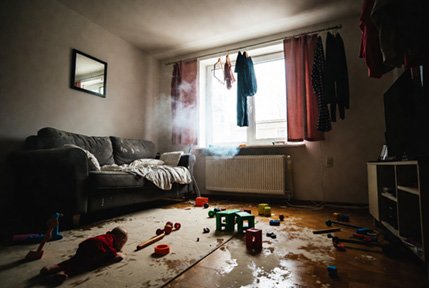
Even after the smoke has cleared from a room, it may leave behind a hidden hazard known as thirdhand smoke. This isn’t just smoke you see—it’s the sticky residue that tobacco smoke leaves on furniture, walls, carpets, clothing, and even toys long after the cigarette is stubbed out. Microscopic toxins—nicotine, carcinogens, and countless other dangerous chemicals—cling stubbornly to these surfaces. Over time, these toxic particles can accumulate in household dust and persist for months.
But how does this pose a risk? Every time surfaces are touched, dust is stirred up, or hands contact contaminated objects and then touch food or mouths, there’s an opportunity for these chemicals to enter the body. This is especially concerning for babies and young children, who crawl, play on floors, and often put things in their mouths—giving thirdhand smoke a direct route into their growing bodies.
Emerging studies highlight that the chemicals in thirdhand smoke don’t just sit harmlessly—they can actually interact with common indoor pollutants, forming even more harmful compounds. Some of these, like the ones linked to lung cancer, have been detected in dust samples from homes where smoking occurs. Even DNA damage has been observed in experimental settings exposed to these lingering residues.
While regular cleaning may reduce thirdhand smoke particles temporarily, it’s not a permanent fix—these toxins keep leaching out from walls, carpets, and upholstery, replenishing the risk. The best way to truly protect your household from the dangers of thirdhand smoke is to keep your home completely smoke-free from the start.
What Is Thirdhand Smoke?
You might have heard plenty about secondhand smoke, but there’s another sneaky culprit lurking in homes, cars, and public spaces: thirdhand smoke. Unlike the smoke you can see floating in the air, thirdhand smoke refers to all those invisible toxic particles and chemicals that cling to surfaces and dust long after a cigarette, cigar, or pipe has been extinguished.
Here’s how it works: after someone smokes, toxins such as nicotine and other cancer-causing chemicals settle onto furniture, carpets, curtains, walls, and even clothing. These lingering residues don’t just fade away over time—they can stick around for weeks or even months, continuing to put your health at risk.
You don’t have to light up to be exposed. Everyday activities like touching surfaces, sitting on contaminated furniture, or breathing in the dust as you sweep up can stir up these particles. Small children are especially vulnerable since they’re always on the floor, crawling, playing, and putting things in their mouths—meaning they can easily ingest these leftover toxins.
Regular cleaning may help lessen the buildup in your home, but unfortunately, it’s only a temporary fix. As long as anyone smokes indoors, those dangerous particles will keep seeping into your environment, turning seemingly ‘clean’ spaces into hidden health hazards.
So next time you’re thinking about the dangers of smoking, remember that the smoke—and its effects—linger far longer than you might expect.
Should E-Cigarettes Be Included in Smoke-Free Policies?
With the rise in popularity of e-cigarettes, vapes, and similar devices, questions have surfaced about whether existing smoke-free and tobacco-free regulations go far enough. While these products don’t burn tobacco, they do produce an aerosol—commonly referred to as “secondhand vapor”—that is released when users exhale. This aerosol isn’t just harmless water vapor; it contains nicotine and potentially a mix of other chemicals that people nearby can inhale.
Although research is still catching up to this relatively new phenomenon, health experts, including the U.S. Surgeon General, have cautioned that exposure to e-cigarette aerosol is not risk-free. Nicotine itself is addictive and can pose health risks, especially for children, pregnant women, and individuals with certain pre-existing conditions. Beyond nicotine, studies have found trace levels of irritants and possibly harmful substances—though often at lower concentrations than traditional cigarette smoke, they can still accumulate with repeated exposure.
Given this uncertainty, many public health organizations recommend extending smoke-free policies to include e-cigarettes. Environments that already protect people from tobacco smoke—such as offices, restaurants, airports, and public transportation—would continue to offer clear air for everyone, regardless of whether the threat comes from a cigarette or a vape. Applying these policies consistently not only removes the ambiguity but also reinforces the message that clean air is important for all.
Ultimately, expanding smoke-free regulations to cover e-cigarettes helps safeguard non-users from involuntary exposure to substances with potential health risks, and aligns with growing efforts to maintain healthier public environments.
Does Regular Cleaning Get Rid of Thirdhand Smoke?
You might think a good scrub or vacuum can wash away the trace chemicals left behind by cigarette smoke. Unfortunately, while regular cleaning may temporarily reduce the levels of thirdhand smoke clinging to furniture, carpets, and walls, it doesn’t solve the problem for long. This is because the sticky toxins and particles hiding in fabrics and surfaces are stubborn—after cleaning, they continue to be re-released into the air over time, much like an unwanted houseguest who refuses to leave.
In short, even diligent cleaning rarely eliminates thirdhand smoke for good. The most effective way to protect yourself and others is to stop smoking inside altogether and regularly air out the living space. Otherwise, these harmful residues keep coming back—despite your best cleaning efforts.
Who Faces the Greatest Danger from Thirdhand Smoke?
While adults can often dodge a smoky room or steer clear of smoky clothes, young children and babies aren’t so lucky. They’re much more likely to come into close contact with surfaces and objects that harbor toxic smoke residue. Crawling on carpets, touching furniture, or picking up toys gives those tiny hands plenty of opportunities to encounter harmful chemicals left behind by cigarette smoke.
Since little ones have a knack for putting their fingers or toys in their mouths, they also have a greater risk of swallowing these lingering toxins—sometimes without you even realizing it. Their developing bodies are especially vulnerable, making early childhood a critical window for smoke exposure.
Reducing Thirdhand Smoke on Surfaces
While routine cleaning—like washing walls, mopping floors, and vacuuming upholstery—can lower the amount of thirdhand smoke residue in your home, this relief tends to be temporary. That’s because harmful chemicals and particles from tobacco smoke cling tenaciously to surfaces and fabrics, slowly re-entering the air over time even after cleaning.
To truly reduce thirdhand smoke exposure:
- Clean thoroughly and regularly, using strong detergents and, when possible, professional cleaning services for carpets and furniture.
- Wash curtains, bedding, and washable materials in hot water.
- Repaint walls and ceilings, and consider replacing items like carpets, drapes, and upholstered furniture if they’ve been exposed for a long period.
Ultimately, the only way to fully remove thirdhand smoke is to create and maintain a completely smoke-free environment so harmful residues no longer accumulate.
Effects on Children
Adults often have a choice about whether or not they’re exposed to secondhand smoke. But children are powerless and vulnerable when it comes to smoke exposure, and it can have detrimental effects on a child’s development.
One of the biggest potential risks to child health from growing up in a smoking home is chronic asthma. As many as one million children are suffering from asthma because of exposure to secondhand smoke, and the secondhand smoke makes related health complications more likely to occur. Children who grow up around secondhand smoke are at greater risk of upper respiratory and lung infections like bronchitis and pneumonia.
Infants exposed to secondhand smoke have more ear infections and are at much higher risk of sudden infant death syndrome, or SIDS.
When mothers smoke during pregnancy, it can also cause problems with their child’s development. Prenatal smoking is associated with very low birth weights and premature births, which endangers a baby’s life and can require expensive medical care at the time of birth.
Risks of Smoking in Cars—Especially for Kids
The dangers of secondhand smoke are magnified in small, enclosed spaces like cars. Even if you crack a window or blast the air conditioning, smoke—and more importantly, the harmful chemicals it contains—hangs around much longer than you might think. For children, whose bodies are still developing and who breathe faster than adults, this concentrated exposure can be especially damaging.
Because the cabin of a car is such a confined area, toxins can quickly reach levels far higher than in most homes. This increases the risk for all sorts of health concerns for everyone in the vehicle, but children bear the brunt: they’re more likely to develop new respiratory problems or see existing conditions, like asthma, worsen after just a short trip with a smoker.
Recognizing these risks, a growing number of states and cities have stepped in and put laws in place to restrict smoking in cars when children are present. This mirrors a broader trend—schools, hospitals, government buildings, and even entire shopping centers are adopting smoke-free policies, not just indoors but across their entire property.
The bottom line: there’s simply no safe level of secondhand smoke exposure, especially for the youngest passengers. Making your car a smoke-free zone is one of the simplest and most effective ways to protect those you care about most.
Laws Protecting Children from Secondhand Smoke in Cars
If you think closing the car windows will shield your kids from secondhand smoke, think again—and in many places, such habits may even be illegal. Across the U.S., a growing number of states and cities have put laws in place that ban smoking in vehicles when children are present. These regulations typically apply if passengers are below a certain age, such as 12 or 18, or sometimes based on weight. The goal? To reduce children’s exposure to the harmful chemicals trapped in car interiors, where toxic smoke lingers long after the cigarette is out.
Even with the best intentions, lighting up in the car with kids can result not only in health risks but also fines if you’re in one of these jurisdictions. So, before you spark up, it’s wise to check your local and state laws regarding smoking in vehicles, especially when you have young passengers along for the ride.
Specific Health Risks
Exposure to the chemicals in secondhand smoke can weaken your immune system and put you at greater risk of developing cancer. Although lung cancer is the greatest risk, some evidence suggests that secondhand smoke may also be linked to breast cancer.
Emerging research has shown that babies of mothers who were exposed to secondhand smoke during pregnancy might have an increased risk of developing certain childhood cancers, including:
- Lymphoma
- Leukemia
- Brain tumors
These sobering possibilities underscore the wide-ranging dangers of passive smoke exposure—not just for adults, but for the most vulnerable members of the family as well.
In addition to increasing the risk of lung cancer, secondhand smoke also boosts your risks of other lung and respiratory infections, such as bronchitis and pneumonia. It can cause more complications associated with asthma in susceptible individuals as well.
Secondhand smoke also drastically increases your risk of having a heart attack, almost as much as if you smoked yourself. Exposure to secondhand smoke is responsible for nearly 50,000 fatal heart attack deaths each year. A 2009 report by the Institute of Medicine found that even brief exposure to secondhand smoke could be significant enough to trigger a heart attack.
But it’s not just your heart that’s at risk. Breathing in secondhand smoke affects your entire cardiovascular system—damaging your heart and blood vessels, and raising your chances of developing and dying from heart disease. Even your risk of stroke climbs with regular exposure, making secondhand smoke a serious threat to anyone’s circulatory health.
Another matter that is less deadly but still a very serious concern is that exposure to secondhand smoke can cause problems with infertility and miscarriage. A study by the University of Rochester Medical Center found that women who grew up with at least six hours a day of exposure to secondhand smoke were 68 percent more likely to have difficulty getting pregnant and to suffer from one or more miscarriages.
Exposure to the chemicals in secondhand smoke can weaken your immune system and put you at greater risk of developing cancer. Although lung cancer is the greatest risk, some evidence suggests that secondhand smoke may also be linked to breast cancer. The risk of lung cancer in nonsmokers increases by 25 to 30 percent when regularly exposed to secondhand smoke. About 3,000 deaths occur each year in nonsmokers who live with smokers.
But lung and breast cancers aren’t the only concerns. Research also suggests that secondhand smoke might increase your risk of other types of cancer, including:
- Larynx (voice box) cancer
- Nasopharynx cancer (the part of the throat behind the nose)
- Nasal sinus cancer
- Many cities are passing ordinances that prohibit smoking in indoor spaces, including places of work, government buildings, and even restaurants and bars. When Pueblo, Colorado enacted a smoking ban in 2003, it resulted in a 27 percent reduction in hospital admissions for heart attacks. Helena, Montana found a 40 percent reduction in heart attacks after a smoking ban. However, some studies suggest that those improvements are only temporary.
- While these changes are important, exposure to secondhand smoke can still happen in a variety of public places where smoking is permitted. This may include certain restaurants, shopping centers, public transportation, parks, and even schools in some regions. The presence of secondhand smoke in areas frequented by families and children is a particular concern—especially in daycare centers, playgrounds, and school grounds. Parents are encouraged to advocate for smoke-free environments in these settings to protect children’s health.
- However, public support is not unanimous when it comes to smoking bans in bars, with support for such measures running only slightly above 50 percent. Even cities that pass ordinances that ban smoking in bars and restaurants often revisit those issues later. The city of Casper, Wyoming, for example, successfully voted to overturn their ban on smoking in certain public spaces.
- Some business owners may worry that going smoke-free will negatively impact their bottom line, but there’s no strong evidence that banning smoking in public places harms business. In fact, many communities have found that smoke-free policies can lead to healthier environments without significant economic drawbacks.
- Practical Ways to Minimize Exposure
- Limiting or completely avoiding exposure to secondhand smoke is the only way to get rid of your risks from it. Although changes in public opinion and even legislation prohibiting secondhand smoke can definitely help to reduce the risk, ultimately only you can control your health by choosing to avoid exposure.
- Whenever possible, choose smoke-free restaurants, shops, and public venues. Let managers and business owners know that clean air matters to you and your family. If your community is considering new smoke-free policies, share your support and encourage others to do the same. Keeping your home and car smoke-free are also important steps—especially if you have children or anyone with health concerns living with you.
- By making informed choices and supporting smoke-free environments, you can help protect yourself and others from the dangers of secondhand smoke.
These risks exist even for people who have never smoked themselves, simply due to regular exposure to secondhand smoke.
Minimizing Secondhand Smoke Risk
The risks of secondhand smoke increase proportionately with the amount of smoke you’re exposed to, although there is no safe level of exposure. When you’re a child, you obviously have no choice about whether or not you’re exposed to smoke. Public health and safety campaigns may be more effective in encouraging parents and other adults not to smoke in the presence of children.
Many cities are passing ordinances that prohibit smoking in indoor spaces, including places of work, government buildings, and even restaurants and bars. When Pueblo, Colorado enacted a smoking ban in 2003, it resulted in a 27 percent reduction in hospital admissions for heart attacks. Helena, Montana found a 40 percent reduction in heart attacks after a smoking ban. However, some studies suggest that those improvements are only temporary.
However, public support is not unanimous when it comes to smoking bans in bars, with support for such measures running only slightly above 50 percent. Even cities that pass ordinances that ban smoking in bars and restaurants often revisit those issues later. The city of Casper, Wyoming, for example, successfully voted to overturn their ban on smoking in certain public spaces.
Limiting or completely avoiding exposure to secondhand smoke is the only way to get rid of your risks from it. Although changes in public opinion and even legislation prohibiting secondhand smoke can definitely help to reduce the risk, ultimately only you can control your health by choosing to avoid exposure.