
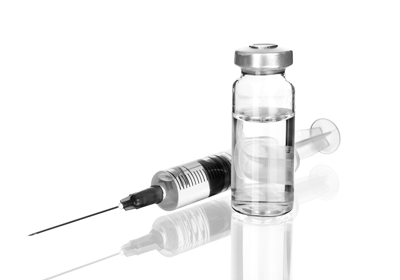
A few years ago, there was a lot of buzz about a quit smoking shot. It made a lot of headlines because it was supposed to be a huge breakthrough that could end nicotine addiction forever…if it worked. We’re going to quickly look into this technology, what it is, and why we haven’t heard much about it in a few years.
What is the Quit Smoking Shot?
This quit smoking shot was a proposed one-time injection that was created to disable the body’s ability to enjoy pleasure from nicotine consumption. There have been similar products on the market for other addictions, but this one was still unique.
The most interesting part of these quit smoking shot solutions was that they were irreversible, a lifetime decision. The way the shot was designed, it basically altered your blood chemistry to prevent nicotine from reaching the brain. And once that happened, there was no going back.
Courtesy of Nabi BioPharmaceuticals
So essentially, it was more of a quit smoking vaccine. This is really interesting because people started proposing giving it to children so that they would never get addicted to smoking. That brings a whole new aspect of morality into it, which we don’t want to get into. But the implications of this vaccine were pretty big no matter what way you look at it.
The problem was, the companies behind this technology had to prove that it worked and that it was safe before it could be introduced to the market.
To learn more about NicVax and quit smoking vaccines in general, check out: http://www.quit-smoking-central.com/nicvax.html
How Does the Nicotine Vaccine Work?
So, what’s actually happening under the hood with this so-called quit smoking shot? Let’s break it down. The science behind it borrows a page from traditional vaccines: instead of targeting a virus, it targets nicotine itself.
Here’s how:
- When you get the vaccine, your immune system is prompted to make special antibodies that latch onto nicotine molecules.
- These antibodies act like security guards. As soon as you light up, any nicotine that tries to get into your bloodstream gets tagged and blocked by these antibodies.
- Because of this, the nicotine molecules become too large and bulky to sneak past the blood-brain barrier.
The upshot? With nicotine locked out of your brain, you no longer get that signature rush or buzz that usually comes with a cigarette. In other words, the pleasure centers stay blissfully unaware you ever smoked in the first place. This mechanism is what made the shot so promising: ideally, if your brain never recognizes nicotine, it’s much easier to break the cycle of addiction altogether.
Did the Vaccine Work? Was It Safe?
The main company behind the nicotine vaccine was a biopharmaceutical company called Nabi. They invested heavily into the vaccine and branded it ‘NicVax’.
Things looked good in the early-going, with the vaccine showing few side effects and a bit of potential to help certain smokers quit. But when it came down to it, it simply wasn’t effective on its own.
The main downfall was that the smokers receiving the vaccine had to have a certain response to it to make it work. Those that responded well to the antibodies did have higher success rates in quitting smoking, but not everybody responded well to them. In fact, there was a notable relationship between the level of anti-nicotine antibodies produced and how successful someone was at staying off cigarettes—people who generated higher antibody levels tended to remain smoke-free longer. But since not every patient’s immune system reacted the same way, the results were inconsistent. This meant that while the science behind NicVax showed promise, its effectiveness really depended on how each individual’s body responded to the shot.
The third round of testing was more rigorous. It included a larger amount of patients and the “goal” was for patients in the vaccinated group to be smoke-free after a year. But after a year of testing, those who had received the vaccination had about the same success rate as those who didn’t. Which basically meant failure, and NicVax was shelved.
To give you a sense of just how far they took it: one of the key studies lasted 12 months and enrolled 301 smokers across nine different centers in the U.S.. These weren’t just casual smokers either—participants had to be at least 19 years old and smoke a minimum of 15 cigarettes a day to qualify. The trial was both randomized and double-blinded, meaning neither the researchers nor the participants knew who was getting the real shot or a placebo.
Two different dosage levels were tested—200µg and 400µg—and the researchers also played around with the timing of the shots. For the group that received the higher 400µg dose, about 24.6% managed to stay off cigarettes for an 8-week stretch between weeks 19 and 26 of the study. By comparison, only 13% of the placebo group managed the same feat. So there was a glimmer of hope for those who responded well to the vaccine, as higher antibody levels seemed to make a difference in staying smoke-free—even if only for a short window.
As for safety, NicVax was generally well-tolerated, with no significant differences in side effects between those who got the vaccine and those who didn’t. But ultimately, the numbers just didn’t add up to a clear win. Despite the serious effort, the vaccine didn’t deliver the long-term results needed to move forward.
Learn more about the phases of NicVax studies here.
Final Answer:
No, the vaccine didn’t work after more intensive studies were done. However, side effects were minimal and there are still groups working on a quit smoking shot or vaccine.
How Does the Nicotine Vaccine Differ From Other Quit Smoking Methods?
Most traditional quit smoking aids—like nicotine patches, gum, or prescription meds such as Chantix—work by tinkering with the brain’s addiction pathways or providing low doses of nicotine to help wean you off. They try to make nicotine cravings less intense or block some of the chemical rewards your brain craves.
But the nicotine vaccine took a new approach. Instead of targeting the brain or easing withdrawal symptoms, the vaccine was designed to go after nicotine itself. Once injected, it essentially “teaches” your immune system to recognize nicotine as a foreign invader. The next time you light up, your body creates antibodies that trap nicotine molecules in your bloodstream, stopping them from ever reaching your brain. No nicotine in the brain means no pleasurable hit—and suddenly, the ritual loses its appeal.
In other words, while most quit smoking products try to soften the experience of quitting or gradually reduce dependency, the vaccine was out to shut nicotine down at the source.
The Future of Quit Smoking Vaccines
So clearly NicVax, in its current form, is not going to be a viable option for smokers anytime in the future. But there is still research funding going into vaccinations that aim to prevent nicotine from reaching the brain.
Selecta, another BioTech company, recently received $8.1 million in funding for their own nicotine vaccination. It’s called SEL-068, though very little information is available on how it differs from NicVax. All we could decipher is that it is synthetic and involves nanotechnology.
Could a Nicotine Vaccine Offer Hope for Stubborn Quitters?
For people who’ve tried (and failed) to quit smoking more times than they can count, the idea behind the nicotine vaccine once sounded like the golden ticket. Unlike willpower marathons, nicotine patches, or the much-maligned gum, the vaccine’s approach was fundamentally different: train your body to block the pleasure-giving effects of nicotine altogether.
The results? Well, for some lifelong smokers—people who had cycled through every method out there—this vaccine offered a practical shot at finally kicking the habit. There are cases where individuals who had previously struggled for decades were able to walk away from cigarettes without the usual daily battles. Some described the urge to smoke simply fading into the background, even during typical “trigger” moments, like road trips or stressful days.
The potential here isn’t just about numbers in a clinical study—it’s about changing lives for those who felt stuck in an endless loop. For anyone who has tried and failed with the standard quit-smoking playbook, a successful vaccine could mean not just a reduction in cravings, but perhaps a real sense of freedom from tobacco’s grip.
Of course, as we discussed, the first generation of nicotine vaccines like NicVax ultimately didn’t make the cut in the final rounds of study. But the principle—helping the body fight addiction on a chemical level—remains a promising angle, especially for people who haven’t gotten results with traditional methods.
How Is This Different From Traditional Treatments?
Unlike most quit-smoking aids—which focus on changing brain chemistry to curb cravings or block the pleasure response—this shot took a totally different path. Instead of tinkering with your brain’s inner workings, the strategy here was to neutralize the nicotine itself before it could even make the journey to your brain’s reward centers.
The logic behind this approach is a bit like installing a security system at your front door rather than inside your living room. By targeting nicotine directly in the bloodstream, the body prevents it from ever delivering that “hit” to the brain. That means, even if you light up, your brain gets no reward—and over time, the compulsion to smoke is supposed to fade away. This method sidesteps a lot of the side effects and complications that can come with medications that act on the brain, such as mood changes or dependency.
Real-Life Experiences from Nicotine Vaccine Trials
But what about the people who actually took part in the nicotine vaccine studies? Let’s take a look at how things played out for some of them.
Some participants, like one long-time smoker who had been battling the habit for half a century, found new hope in the trial. Despite countless attempts to quit with the usual suspects—cold turkey, nicotine patches—you name it, nothing had stuck. But after joining the study back in 2006, this participant managed to put cigarettes down and hasn’t looked back since.
Interestingly, the urge to smoke seemed less overwhelming this time around. Even during common “trigger” moments—like a stressful drive through a big city—it wasn’t the all-consuming craving it used to be. In fact, the decision to enter the trial was sparked by health concerns and the realization it was finally time to break free, especially after witnessing the toll smoking took on a loved one who later developed emphysema.
It’s worth noting that, because these studies are “blinded,” participants often don’t know whether they actually received the vaccine or a placebo until results are officially released. So while these successes are inspiring, it’s possible some were due to a combination of real effects, willpower, and a dash of trial magic.
Our Opinion
In the end, quitting smoking isn’t about a simple pill or solution to help you quit. We’ve talked about this a lot. Quitting smoking is completely possible without the help of anything so extreme. It is possible to quit cold turkey if you have the right support and information behind you, and a lot of people believe this is the safest and most effective way to go.
Even those who use Quit Smoking Aids or Nicotine Replacement Therapies are taking a better approach than simply believing that a shot or pill can solve all their problems. The fact of the matter is, eventually you’ll have to face the nicotine withdrawal, and no pharmaceutical solution is going to change that. And if it does, than the side effects are probably pretty scary.