Many people trying to quit smoking or vaping turn to cannabis products, including high-potency THC concentrates, hoping they will help manage cravings or replace the hand-to-mouth habit. While cannabis affects the body differently than nicotine, THC concentrates are extremely potent and can create new challenges for those seeking complete freedom from addiction.
At Quit Smoking Community, we provide honest information so you can make informed decisions. This guide explains the main types of THC concentrates — with a clear focus on how they relate to nicotine cessation.
Why THC Concentrates Matter for People Quitting Nicotine
THC concentrates (often called “dabs,” “wax,” or “extracts”) can contain 60–99% THC — far stronger than regular cannabis flower. Many are consumed through vaping or dabbing, which can reinforce the same behavioral patterns you’re trying to break from nicotine vapes or cigarettes.
Key concerns during a quit attempt:
- Cross-addiction risk: High-potency THC can activate reward pathways similarly to nicotine.
- Vaping overlap: Using THC carts or dab pens keeps the nicotine-vaping habit alive.
- Stronger withdrawal: Combining or switching substances can intensify cravings and anxiety when you eventually quit everything.
- Tolerance buildup: What starts as “just to help me quit” can quickly escalate.
Main Types of THC Concentrates
Here’s a clear breakdown of the most common types:
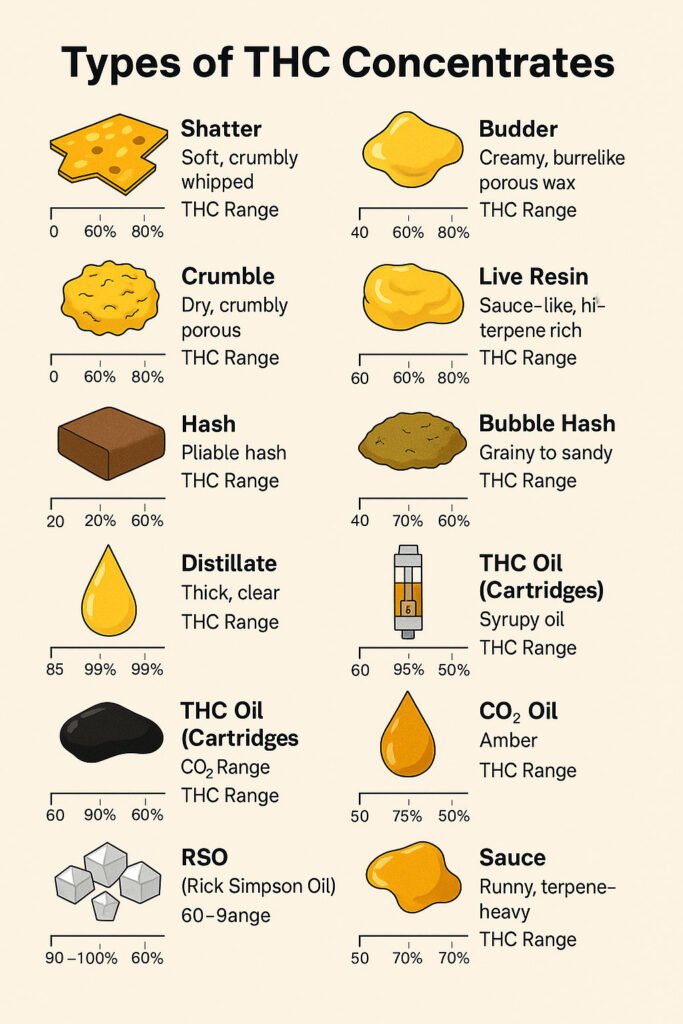
1. Shatter Glass-like, brittle, and translucent. Usually 70–90% THC. Made with solvents like butane. Popular for dabbing because of its purity and stability.
2. Wax / Budder / Crumble Softer, easier-to-handle textures (crumbly or creamy). 60–85% THC. More beginner-friendly but still highly potent. Often used in dabs or sprinkled on flower.
3. Live Resin & Live Rosin Terpene-rich extracts that preserve more flavor and aroma. Live rosin is solventless (made with heat and pressure). Prized for taste but still extremely strong.
4. Distillate Ultra-refined, clear oil reaching 85–99% THC. Commonly used in vape cartridges. Lacks natural terpenes unless added back. Very discreet and potent.
5. THC Diamonds / Sauce Crystalline THCA paired with terpene-rich “sauce.” Can reach near 100% purity. One of the strongest options available.
6. Rosin & Bubble Hash Solventless options made with ice water or heat/pressure. Generally considered “cleaner” but still deliver high THC levels.
7. RSO (Rick Simpson Oil) Thick, tar-like full-spectrum oil, often used orally or topically. Known in medicinal circles but extremely potent.
Important Risks When Quitting Nicotine
- Reinforces vaping behavior: Many THC concentrates are vaped, which can trigger nicotine cravings.
- Higher addiction potential: The intense high from concentrates can lead to psychological dependence.
- Lung health concerns: Dabbing and vaping concentrates still involve inhaling heated substances.
- Anxiety & paranoia: High doses of THC can worsen withdrawal symptoms for some people.
- Difficulty achieving full sobriety: Using concentrates may delay the goal of being completely substance-free.
Research shows that co-use of cannabis and nicotine often makes it harder to quit either substance.
Healthier Alternatives for Managing Quit Symptoms
Instead of turning to high-potency THC products, consider these proven nicotine-cessation supports already on our site:
- Nicotine Replacement Therapy (patches, gum)
- Behavioral tools and community accountability
- Natural approaches like fasting for withdrawal support
- Psilocybin-assisted quitting research
Final Thoughts from Our Community
THC concentrates are very strong and can complicate your nicotine quit journey. While some people use cannabis mindfully during transition periods, the goal for most successful long-term quitters is becoming fully nicotine-free and minimizing other dependencies.
If you’re currently using THC concentrates while trying to quit smoking or vaping, we encourage you to be honest with yourself about whether they’re truly helping or simply replacing one habit with another.
You don’t have to do this alone. Join our community for real stories, daily support, and encouragement from people who have successfully quit.